


Last Updated: September 14, 2026
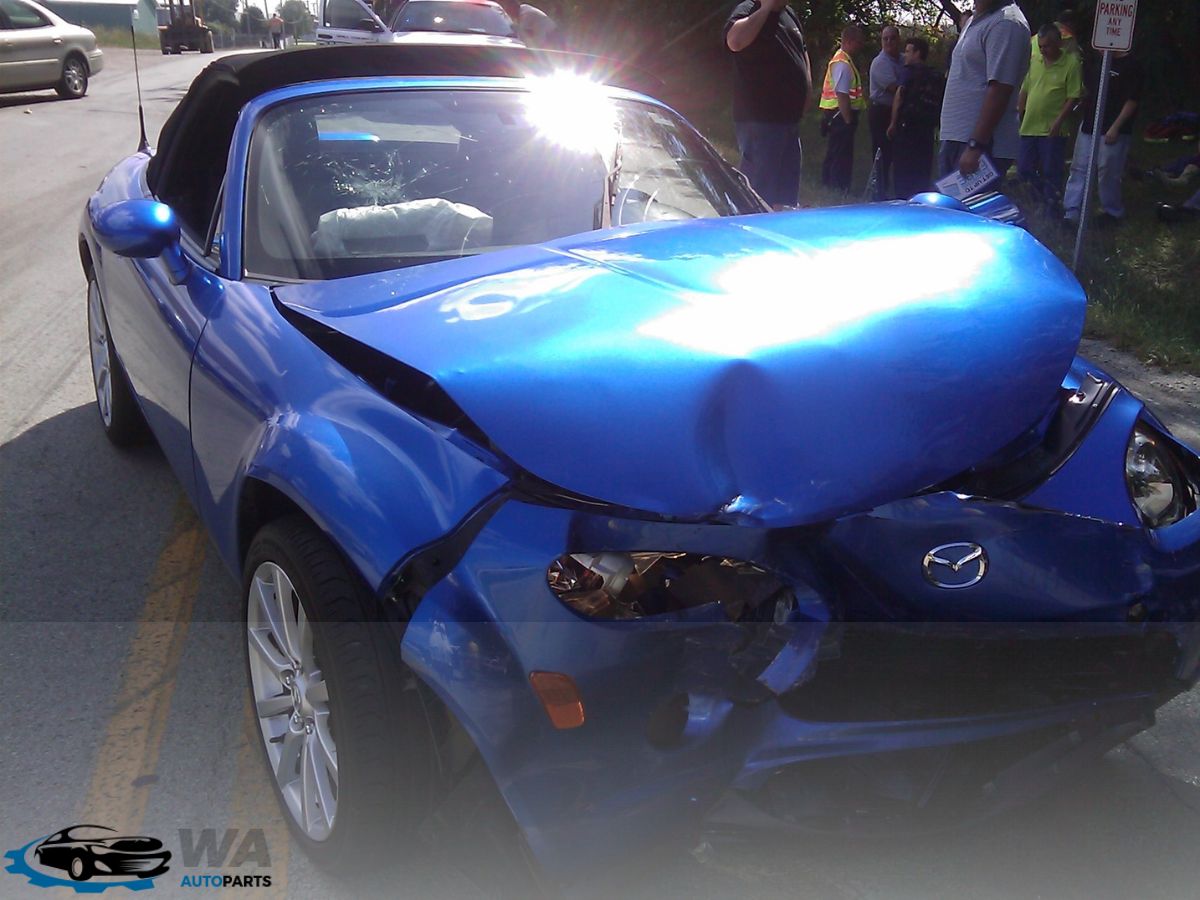
What happens to a wrecked car before its parts reach you?
There are several steps between a crashed vehicle arriving at a dismantler and a usable part being available for your car.Vehicle evaluation
When a car comes in, the team assesses its condition and decides which parts are worth salvaging. This depends on the make , model , year and type of damage. A car written off after a front-end collision could have perfectly good rear panels, a complete working interior, undamaged suspension and a gearbox with lots of life in it.Identifying components to be reused
Some parts from some cars can’t be reused. The dismantler will go through the vehicle and separate what is in acceptable condition from what isn’t. Parts with existing damage, excessive wear or structural problems are sorted out here.Safe demolition
All fluids are drained before any dismantling takes place. Engine oil, coolant, fuel, brake fluid and refrigerant are kept separate from each other to prevent contamination. Then the components are removed carefully so as not to cause new damage.Testing and inspection
Wherever possible, mechanical parts are tested. Check alternators and starters output. Engines can be checked for compression or started up briefly. Electrical components are tested for functionality. If a part fails the basic checks, it is not listed for sale.Preparation and cleaning
Passing parts are cleaned and tagged with info from the donor car: make, model, year and engine specs. That’s the info that allows a wrecker to match up a part accurately when a buyer calls.Parts availability and storage
After processing, parts are catalogued and stored. When you ask about a part, the team will check that catalogue against your vehicle’s specifications to confirm if they have a suitable part in stock.Which parts can be recovered from wrecked cars?
There are more parts you can salvage from a wrecked car than most people realise. Main categories are here. Engines and transmissions. If you are lucky, you will find a car with a good engine but structural damage at a car wrecker. Engines salvaged from low mileage or lightly damaged vehicles are a cheaper alternative to a full rebuild or a new unit. The collection of gearboxes and automatic transmissions is the same. Body panels. Doors, bonnets. Undamaged wrecked vehicle panels are often salvaged for repairs to the same make and model of car. A good door, bonnet, guard or boot lid can save a lot of money instead of buying new sheet metal. Mirrors and lights: Headlights, tail lights, indicators and side mirrors are often salvageable. These can be expensive new, especially on European or Japanese models. Suspension and wheels: Undamaged axles often result in alloy wheels, tires, control arms, struts and hub assemblies. Condition is variable, so inspection is necessary. Electrical parts: We frequently recover alternators, starters, ECU’s, sensors, wiring harnesses and switches. Electrical parts are a good candidate for a wrecker, especially if an OEM replacement is expensive or hard to find. Interior Parts: They tend to remove seats, dashboards, door cards, centre consoles, carpets and steering wheels from vehicles that have body or mechanical damage but a clean, intact interior. Other mechanical parts: During dismantling, common components recovered include radiators, fuel tanks, power steering racks, brake callipers, cooling fans and diffs. It should also be noted that not all parts of all vehicles will be in usable condition. A good wrecker will tell you up front if a part is good or not before you buy it.Why consider used car parts in Perth?
There are some practical reasons why Perth car owners and mechanics routinely opt for second-hand parts over new or aftermarket equivalents. The most obvious is cost. Used car parts are generally cheaper than new ones, and on older cars or imports where genuine parts are expensive, the difference can be significant. For some repairs, used is the difference between fixing the car and scrapping it. Availability is another issue. When a vehicle model is discontinued, new parts become more difficult to obtain and more expensive. Auto wreckers in Perth usually have the best selection of parts that are no longer made or stocked by the dealers. There’s also the question of originality. A used part from a wrecked vehicle is a genuine OEM part, not a reproduction or aftermarket part. If you don’t want substitutes, a wrecker is a good place to get manufacturer-original parts. But, that doesn’t mean used parts are always the best choice. For safety-critical parts, the age and condition of the part matter, and it’s worth getting your mechanic’s assessment. However, for many repairs, it makes good sense to source from a reputable Perth auto wrecker.How to choose the right used car part
Getting the right part the first time will save everyone time. Here’s what to check before you purchase.- Year, make, and model: These three narrow compatibility down significantly. Know them, before you enquire.
- Engine & transmission specs: Many cars were offered with several different engine choices. A 2.0L and a 2.4L from the same model range are not necessarily built with the same components.
- Original part no: If your workshop or a dealer has given you a part number, pass that on. It speeds up and improves matching.
- Manufacture date: Mid-cycle changes in some vehicles affect part compatibility. If you know your compliance plate date say it.
- Terms & Conditions: Ask how the part looks. A good wrecker will inform you of wear or minor damage.
- Return terms: Find out if there’s a return or exchange option before you buy, especially for mechanical parts.
Why the source of your used car parts matters
Used parts sources are not created equal. A component that has not been properly identified, inspected or stored can cause problems later. WA Auto Parts in Welshpool have over 15 years’ experience in vehicle dismantling and parts recovery in Perth. Compatibility checks are accurate as parts are catalogued by donor vehicle. Stock ranges from common Japanese and Korean cars through to European marques and popular Australian utes. WA Auto Parts also provides a parts fitting service at their Welshpool workshop for customers needing fitment assistance. Engine & gearbox swaps, suspension work, and electrical component installation all on site. To enquire about a specific part or availability, please call (08) 9358 1392.From wrecked vehicle to useful replacement part
Here’s a real-world look at how one unwanted vehicle creates value for other car owners in Perth. The vehicle is written off following a head-on collision. The damage is to the front end. The engine is working well, the gearbox is OK, both rear doors are intact, the interior is clean, and the alloy wheels are in good shape. The taillights and most of the electrical stuff are good. The vehicle, after assessment, dismantling, and inspection gives:- An engine to replace a failed unit in the same model in the next town.
- A gearbox from a different car on the same platform
- A rear door in place of a damaged side-impact panel
- Alloys to an owner replacing a cracked wheel.
- Interior trim fulfilling an order for someone wanting cleaner door cards
- Electrical components for several separate buyer enquiries