


Last Updated: January 30, 2026
What is a V-belt?
Most modern cars use V-ribbed belts, but people often call them V-belts. Mostly, this is because their design has gotten better. A regular V-belt has a smooth surface, but a V-ribbed belt has ribs that run along the length of the belt and fit into the ribs of the pulley. This structure makes it easier to hold on, work better, and move power.
What are the different reasons why a V-belt squeals?
Before answering the question of why a V-belt squeals, it’s important to know that this noise can have a number of different causes, depending on the situation. There is always a reason for the loud squealing sound, though, and it should be fixed right away to avoid damage that could be caused by a broken belt. The noise usually happens when the belt and pulley don’t rub against each other enough.
One reason this happens a lot is because the belt is too loose. This could happen if the belt has stretched over time or if the device that tightens it is broken. The belt can also lose grip on the pulley if it gets wet, dirty, or greasy. When the belt slips, it can make a noise like a squeal.
The V-belt may whistle when you start it up or when it’s cold and wet outside, like in the fall or winter. This is usually because of the cold and wet weather. In these cases, the noise usually goes away when the engine gets hot. The squeaking doesn’t always come from the V-ribbed belt itself, though. The sound could also be coming from nearby parts like vibration dampers, idler pulleys, or tensioning pulleys. WA Auto Parts also sells replacement belts and other parts that go with them.
What should you do if your V-belt makes noise?
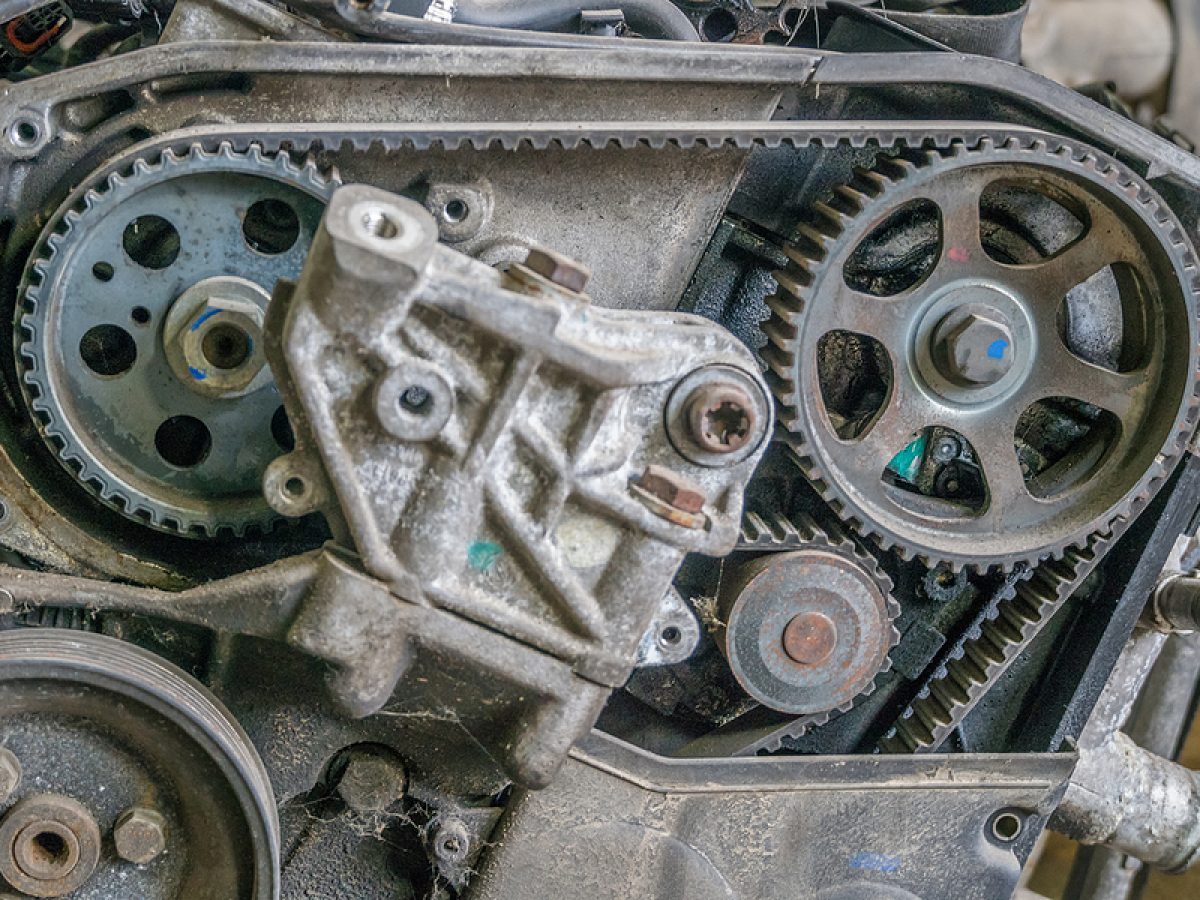
Finding out what is making the noise is more important than what you can do about it. First, you should look at the ribbed belt when it is not moving to see if it is worn out. If the belt is too flexible or even porous, this could be the first sign of a problem. If you find wet or oily residue on the ribbed belt, the same thing is true! When looking at the belt, though, you should also look closely at the sides. This is because the squeaking could also be caused by the ribbed belt rubbing against the side of the ribbed pulley.
If you can see unusual wear and tear, that is another sign of a problem. If a visual inspection at a standstill doesn’t show any of these signs, a visual inspection while the engine is running and the vehicle is in motion may give you more information. You are close to finding the cause if you can smell warm rubber or feel it rubbing against something. You should also be able to touch the bearings and pulleys after running the V-ribbed belt (but only when the machine is not in use). If they get noticeably hot soon after use, it could be because of too much friction.
What are sprays useful for?
If a V-belt squeaks, V-belt spray will only help a little bit. This is because once a ribbed belt or other parts are broken, worn out, or too loose, even V-belt spray can only partially stop the squeaking, not fix the problems! The sprays aren’t completely wrong, though, because they help keep the material in good shape and the rubber flexible. A V-belt spray can also help with squeaking if it’s caused by the weather. If the V-belt still squeaks after you change it, the same is true. But if the spray doesn’t work or only works for a short time, you shouldn’t have to wait too long to go to the workshop!
Is it important to pay attention to squeaking?
If a V-belt squeaks for a long time, you should look into the cause right away. A broken or defective V-belt can cause more damage and higher repair costs.
How much does it cost to replace a V-belt?
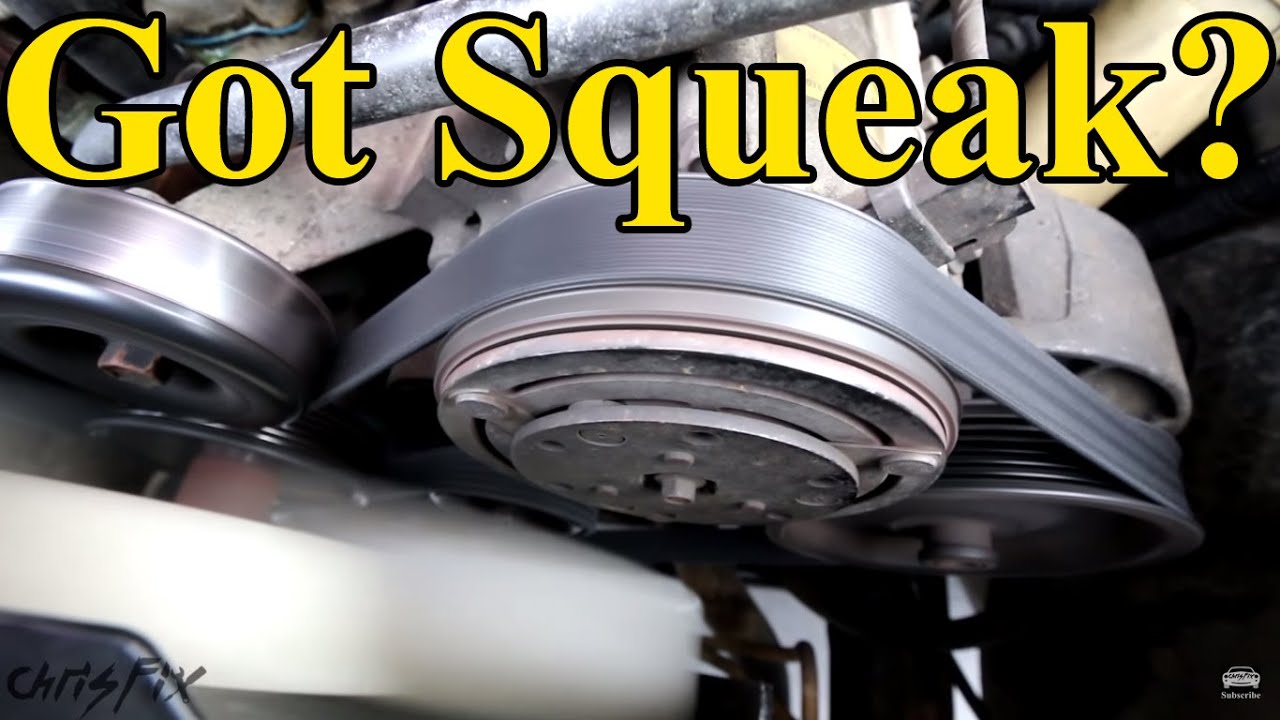
Changing the belt usually costs between $25 and $50 for the materials. Sadly, the change itself often costs a lot of money because of how much work it takes! You should set aside an extra $150 to $200 for the installation, depending on the type of car you have. Because the work is so hard and the materials are so cheap, it’s often worth it to change the V-belt as a safety measure whenever repairs are made that require the V-ribbed belt to be taken off anyway.